

Meat-Eating Plants Keep Surprising Scientists

Why would plants abandon their most advantageous super power, photosynthesis? The ability to convert sunlight, water and a common gas in the atmosphere (carbon dioxide) into free food is remarkable in itself. It’s odd, then, that a select bunch of plants have evolved away from that abundance of low-cost energy. Carnivorous plants derive some or all of their required energy from capturing and digesting insects, small vertebrates and animal-like _____1______. In other words, carnivorous plants are ‘meat eaters.’ But how do these strange plants fit within the ecosystems they inhabit, and what can they teach us about the diversity of life on Earth?
How Plants Became Predators
Of the roughly 391,000 species of plants known to science, only _____2_____ are carnivorous. The rest obtain energy solely through photosynthesis, with a few parasitic plants as well. Research has revealed that many of the carnivorous plant species are very distantly related, often to the tune of millions of years of separation. But it turns out that most carnivorous plants have taken the same genetic path towards ______3______. By studying the genomes, or DNA, of various carnivorous plants, the scientists were able to find out which segments of DNA are associated with the production of the _____4_____ that make it possible to break down captured animals. What they found was that it’s a prime example of convergent evolution. Besides the small segments of DNA that they share, the rest of their genomes strongly suggest that there are several lineages of carnivorous plants that evolved into their present form independent of each other. So perhaps rather than speaking of carnivorous plants as a group, we now understand that plants in general can become carnivorous.
What is the benefit of being a carnivorous plant? From the perspective of the plant, animals are basically concentrated _____5_____. The insects and even small vertebrates that get caught in their _____6_____ provide life-giving resources for these specialized plants.
How Do Plants Catch Animals?
Each group of closely-related carnivorous plants has its own method of capturing prey. The diversity of capture methods has pushed the boundaries of what’s possible in the plant world.

______7______ traps are formed by a single leaf that is curved into a pitcher-shape. Insects are attracted to nectar along the rim of the pitcher. Tragically for the insect, the leaf is slippery, and the prey soon loses its footing and slips into a ______8______ chamber at the base. Once trapped in the chamber, it becomes a slowly digested meal for the plant. The largest carnivorous plant in the world is the giant montane pitcher plant (Nepenthes rajah). Its giant pitfall trap grows to _____9_____ feet tall in size, trapping even small vertebrates like lizards inside.
Adhesive traps use sticky substances to first capture the prey and then cover it in suffocating mucus. Digestive enzymes then digest the catch. The European round-leaf sundew (scientific name Drosera rotundifolia) was well-studied by evolution pioneer ______10______. His fascination with the plants led to his discovery of the first known carnivorous plants.
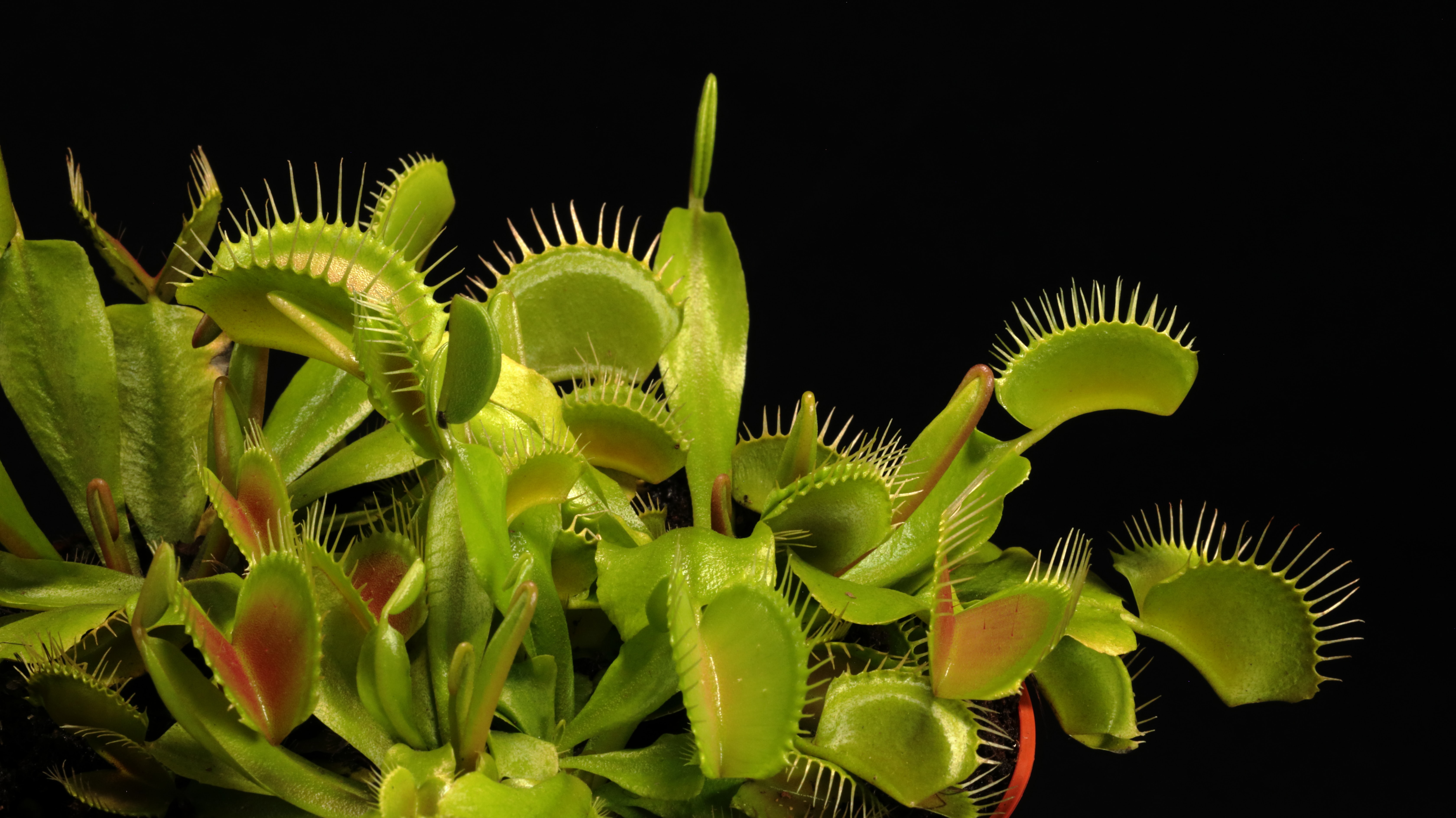
Snap traps are famous examples of plant carnivory. These species keep their _____11_____-shaped trap open until something stimulates the receptors inside, causing it to quickly snap shut. Soon after, enzymes begin to digest the meal. The ______12______ Flytrap (scientific name Dionaea muscipula) is a popular carnivorous houseplant with a deadly snap trap.

Trap doors are found in aquatic environments. Once prey triggers the opening of the trap door structure, water rushes into a hollow tube, causing suction forces. The prey gets ______13______ inside of the plant, where it will become plant food. Aquatic bladderworts are ______14______ underwater plants that attract small crustaceans to their trap doors, where they are sucked in for digestion.

One of the most exciting things about the study of ‘meat-eating plants’ is that there are probably many more out there waiting to be discovered. In 2021, a common plant in ______15______, Canada was discovered to be carnivorous, shocking the world of plant science. Despite their awe-inspiring diets and exotic beauty, many species of carnivorous plants are facing threats to their survival. Over-harvesting wild plants for money-making plant traders has decimated the Venus fly trap, among others. Habitat destruction, especially in rainforests, has reduced the ecosystems that these species depend on to thrive. Climate change looms large over every species on Earth. By spreading awareness and working together, we can do more to protect these most spectacular gems of the botanical world.
