

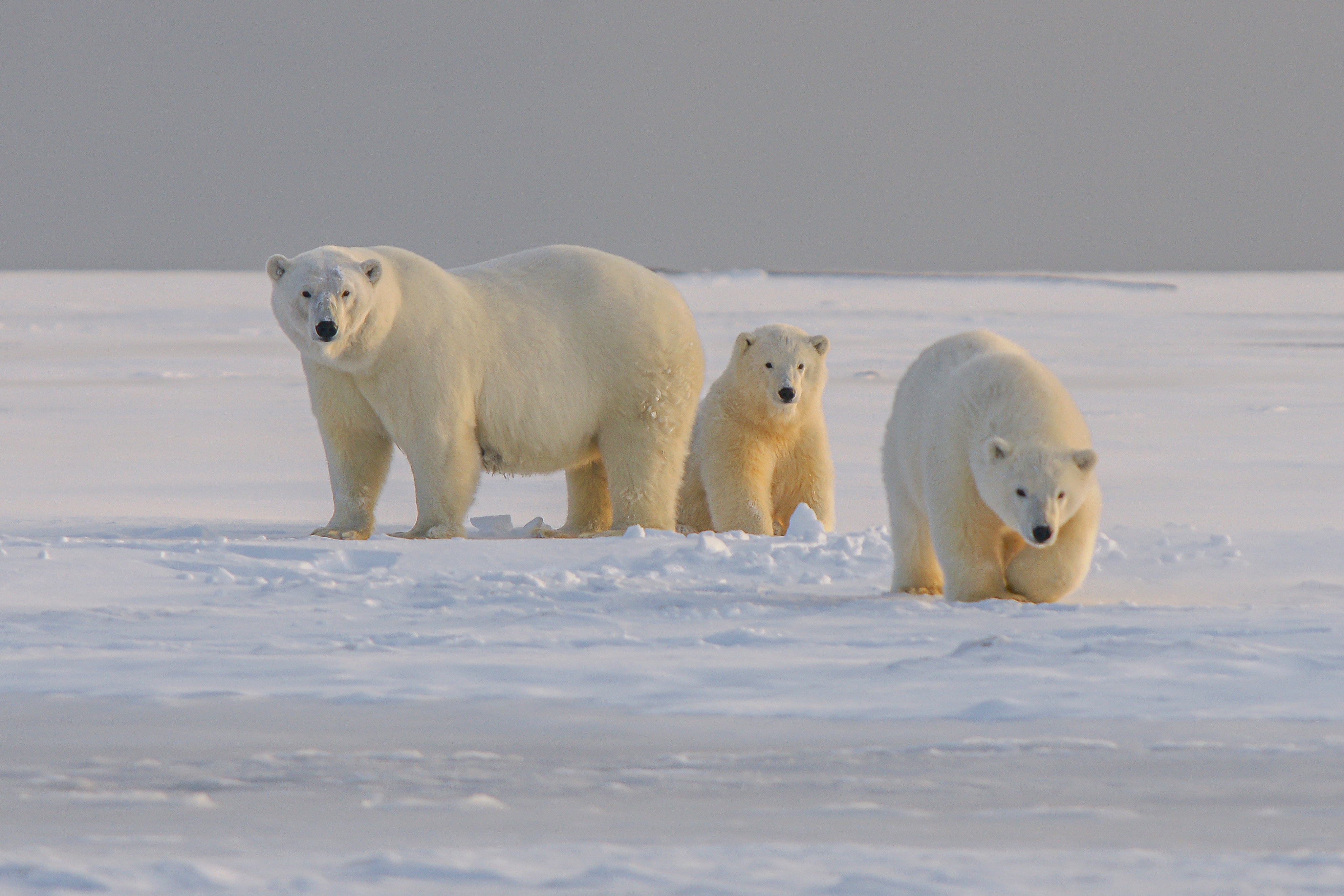
Polar Bears: the Largest Land Predators in the World
Polar bears are built for cold weather. They have a thick layer of fur that insulates them from the cold and a layer of _____1_____ that helps to keep them warm. Their paws are also wide and padded, which helps them to walk on ice without slipping. Additionally, their _____2_____ is very acute, which helps them to track down food in the snow. However, polar bears are not immune to the effects of climate change. As the ice melts, polar bears are forced to _____3_____ for longer distances in search of food. This can lead to exhaustion and even death. Additionally, melting ice makes it easier for _____4_____ to access polar bear habitat, leading to increased hunting and habitat loss. As a result, climate change is a serious threat to the survival of polar bears.

Here are some interesting facts about polar bears: They are the largest land predators in the world. Females can weigh up to 660 pounds, and males can weigh up to ____5_____ pounds. They are excellent swimmers and can hold their breath for up to two minutes underwater. In fact, they have been known to swim for more than 60 miles at a time. Polar bears are found in the Arctic Circle and sub-Arctic regions of North America, Europe, and Asia. They are mostly active at _____6____. If you’re ever lucky enough to see a polar bear in the wild, consider yourself one of the luckiest people on Earth.

If you’re ever lucky enough to spot a polar bear in the wild, don’t worry about being on the menu. These massive predators mostly dine on seals, which they stalk at the edge of ice floes. When a seal _____7_____ pops its head up for a breath of air, the polar bear pounces, delivering a killing bite with its sharp teeth. But that’s not the only way these bears catch their meals. They also use their strong sense of smell to track down seal _____8_____, where they patiently wait for a chance to feast. And if there’s still no luck after all that hunting, polar bears will happily eat just about anything else they can find, including kelp, _____9_____, and ____10_____. So next time you see a polar bear, give it a wave – and maybe some food – from a safe distance.
